

Before attending Columbia Business School, I did a fair amount of research and due diligence, including speaking with current students about their experiences in the program. In one of the most memorable conversations, a student told me that if I attended Columbia, my learning team – the group of five to six students randomly paired together to take on most of the core curriculum – would be my rock.
He said that, over the course of the program, something would happen. Someone would get sick, or drop out, or change jobs or lose someone they love. Or a combination of some or all of the above. In a good learning team, he explained, people take turns stepping back and stepping up. The group stretches to support whoever needs it most.
The student I spoke with was absolutely right, and luckily for me, I hit the jackpot with my learning team. But even with his matter-of-fact reminder about the inevitability of hardship, I never really expected those things to happen, and certainly not to me.
As we kick off 2026, that conversation resurfaced in my mind. Not because I’m a pessimist, but because it simply is what it means to be human.
This year, people you love will struggle. Plans will fall apart. You’ll feel overwhelmed, disappointed or afraid. You might even experience profound grief.
But you’re built to endure.
Resilience isn’t a rare trait handed out to a lucky few. It’s our baseline as humans.
And yet one of the dominant narratives – at least in the world the algorithm has currently designed for me – suggests that we’re more fragile than ever.
We live in a time of unparalleled comfort and convenience. Many of our lives can be lived almost entirely through a screen. We can shop, work, connect, seek entertainment and even get medical care without ever leaving our home. For many of us, there’s very little friction left in daily life.
At the same time, stress is often framed as inherently dangerous – something to be avoided, minimized or treated as harmful. The opposite of self care.
But what if that belief is part of the problem?
There’s a term called concept creep – where definitions of harm expand more broadly and terms once reserved for truly severe experiences are increasingly applied to milder or more common forms of distress. To be clear, there are real benefits to the idea of concept creep – greater awareness, more empathy, more inclusion and better interventions to actually help people deal with their pain.
But, when we come to believe that mild to moderate adversity will break us, it often does – not because it’s truly unbearable, but because we expect it to be.
If that’s difficult to sit with, I can relate. It was challenging for me to wrap my head around as well, primarily because it sounds like dismissing people’s real experiences, or invalidating pain that deserves to be acknowledged. Particularly for groups that have been historically underserved by the medical community or whose pain has been routinely ignored.
But acknowledging pain doesn’t mean we need to assume lasting damage. It isn’t about denying reality, but rather about recognizing how powerful our beliefs are. The brain follows expectations. If we assume hardship = harm, the data says we’re actually more likely to experience it that way.1
Validation of feelings and experiences matters.
But so does confidence in our capacity to endure.
The world does feel chaotic. Bad things are already happening in 2026. Ignoring that doesn’t help.
But there’s a difference between acknowledging reality and surrendering to despair. Psychologists sometimes call this tragic optimism, a term coined by Viktor Frankl to describe the ability to acknowledge suffering and move forward with hope at the same time.
It says yes, this is hard. And I’m still choosing to show up with courage, agency and kindness.
For many people, that choice starts with action.
In moments of uncertainty, doing something – almost anything – can be stabilizing. It might be volunteering, raising money for a cause you care about, creating something, helping a neighbor, playing a sport or moving our bodies.
Action or movement reminds us we’re not powerless.
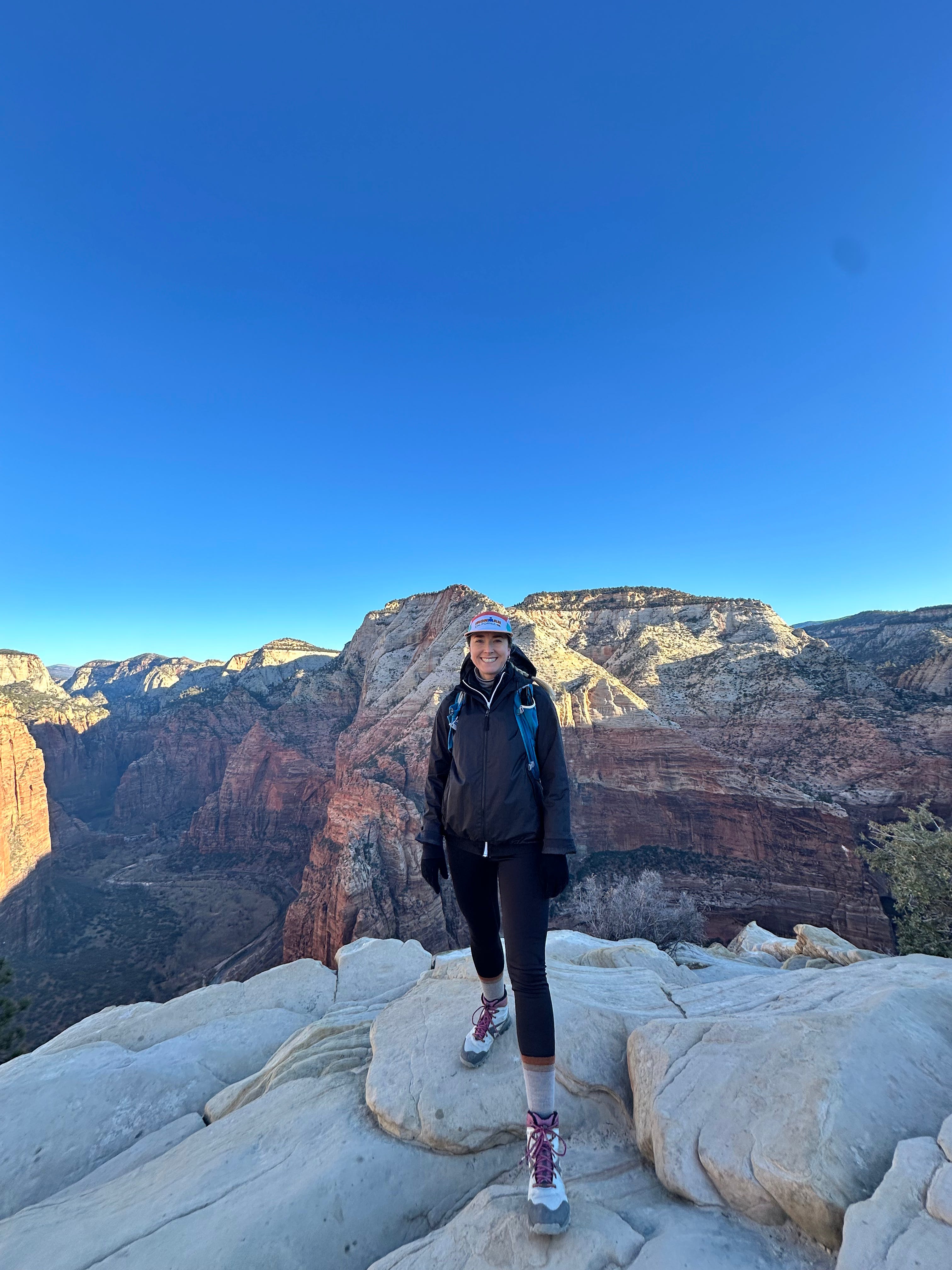
It’s part of why so many people navigating recovery, grief or major life disruptions or transitions gravitate toward big challenges – often fitness challenges – to help them through. (I’m currently reading Finding Ultra by Rich Roll, which is possibly what inspired this post. Highly recommend.)
A physical challenge creates structure, builds confidence, helps us stay steady under pressure and helps us change what we believe is possible.
So as we head into 2026, maybe the invitation isn’t to avoid struggle, but to reframe it. To voluntarily choose to do something hard. To set a goal that asks something of your body, because the body has a way of teaching the mind what it can survive.
It doesn’t have to be extreme, and it’s all relative. What’s challenging for you might be different from what’s challenging for me.
I’ll wrap it up by saying that resilience isn’t about pretending everything will be okay. It’s about trusting that even when things aren’t okay, you will be.
Yes, bad things are going to happen this year. But good things are going to happen too. They might be quiet, they might be hard-won, they might be HUGE, or small or possibly unexpected. Be ready for those too. 😉
And remember, life happens out there! Have fun, stay safe.
Love,
Em
Neuroscientist Fabrizio Benedetti has shown that expectations alone can trigger measurable biological responses in the brain and body. In his research on the nocebo effect, the counterpart to the placebo effect, anticipating harm activates stress-related neurochemical pathways, including increased cortisol and anxiety-related signaling, while dampening the brain’s natural pain-relief systems. In other words, when people expect damage, the nervous system responds as though a threat is already present, intensifying pain, anxiety and physiological strain. This does not suggest that suffering is imagined or that trauma can be “thought away,” but rather that belief plays a powerful role in shaping how hardship is experienced and processed.